THOUGHTS WHILE JUGGLING
The fragility that juggling represents has been one of my greatest sources of inspiration.
I’m not always the most accepting person toward myself. I’m very demanding, and I have struggled a lot with feelings of insufficiency. Through juggling, with its visible mistakes – dropping a ball in front of an audience – as well as the specifically beautiful capabilities it has given me, I have grown to accept my imperfections.
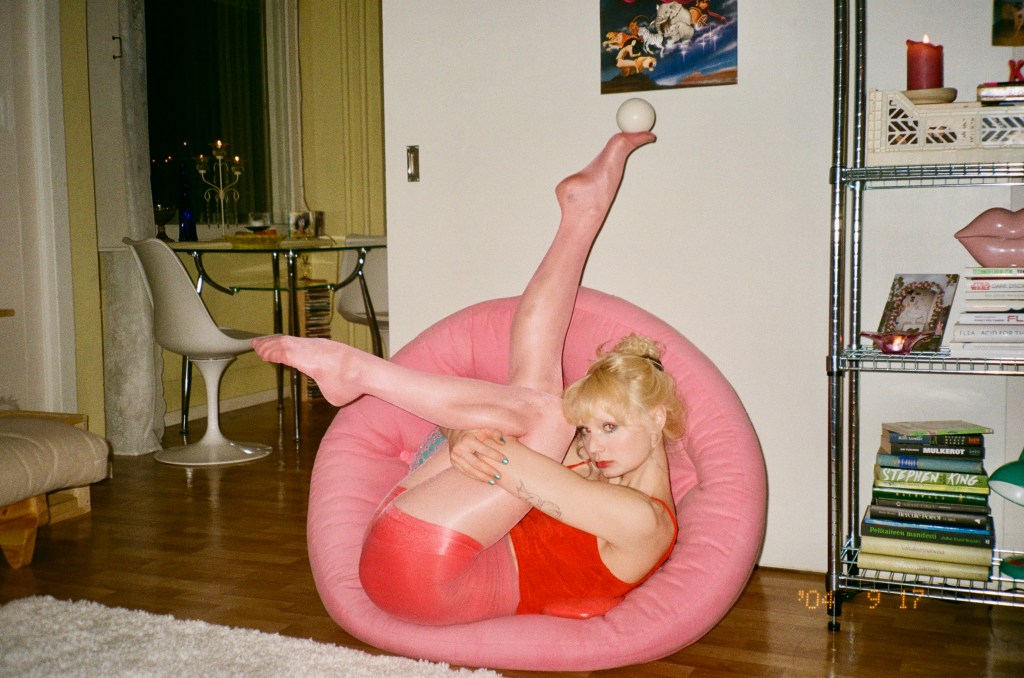
It took time, but juggling has been a major influence in teaching me how to accept the mistakes I make in life and to recognize the qualities that makes a human beautiful.
Juggling in general has shaped my life into what I have always dreamed it could be; a creative professional artist, bringing my juggling art to people. That is why my greatest inspiration lies in honoring juggling through my work, drawing inspiration from its fragility and endless possibilities.
I didn’t find juggling, juggling found me. I hadn’t even considered it until 2,5 years ago, when I came from a theatre background to a circus school in Finland. I fell in love. I wanted to try all the different aspects of juggling – that is how I also ventured into foot juggling.
From the moment I picked up the balls, it has been an endless rollercoaster of emotions, successes, and failures. I have dedicated the past years of my life to the creative world of juggling. Now, as a professional juggler after less than three years, all the work has been rewarded.
However, I have always been a juggler at heart – I just picked up the balls later in life. All the creative and artistic work I began as a child has shaped the way I approach juggling today.
The difficulties definitely lie in the psychological side of juggling. Nerves affect the body, and they affect every throw. Failing on stage – especially in juggling – is so visible. As someone who is already very sensitive, it has been difficult to deal with the psychological side of this discipline. To not tie my own worth to that failure.
Because juggling plays such a big part in my life, at times I have truly felt heartbroken with it. In these moments, I like to remind myself that in my juggling I combine, among other things, expressive acting, movement, music, and contact with the audience – and together, all of these form juggling art.
Art cannot be valued or measured. Art is not based on a technical performance. A drop is part of that art just as much as the throwing itself. The fragility that juggling represents has been one of my greatest sources of inspiration. By dropping, I bring the most beautiful part of juggling onto the stage – its fragility.
I want to represent a new way of juggling and of thinking about it as a form of art. That means I speak openly about dropping as a part of that art and create juggling where the goal is not the technique itself, but a means of expression. Juggling expands the boundaries of art – it can combine all artistic elements together and present a human being at their most bare.
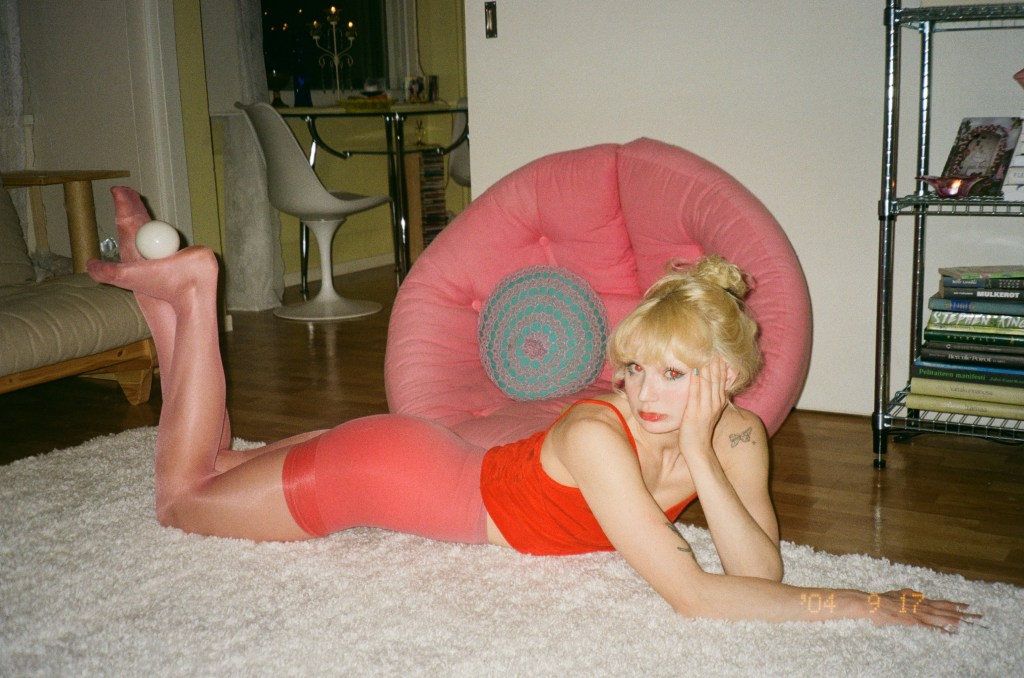
THOUGHTS WHILE JUGGLING
10.8.2026
Although it may certainly seem to the outside that I am a juggler from all of my heart and soul, which is true, I still feel that I haven’t quite found the connection between myself and the juggler within me. Because for as long as I have been juggling, I have also been ashamed and afraid.
Of course, I have loved it. I’ve been shining like never before. But while I’ve spoken publicly a lot about how juggling has been a gentle cradle for me and helping me blossom into who I am, I also want to speak openly about what else it has brought into my life:
All of my insecurities when growing up – such as my longing for approval and my fear of losing control – have been so enormously present through the very nature of juggling itself (because of the constant dropping and the impossibility of complete control). They have triggered some very toxic coping mechanisms I have learned in my youth, again in this present day.
I cannot control how people see me or what they think of me when I fail on stage.
With other art forms, I always felt I could still hide behind something. Behind a character, the fourth wall, or behind a script. With juggling, I cannot hide. Mistakes are visible.
Circus tradition is built around the trick itself: its tension, its suspense, and the gift of wonder the performer gives to the audience. If, for whatever reason I cannot give that gift – whether because of circumstances completely outside my control or simply because of the imperfect nature of being a human – I often feel that sense of insufficiency deep in my bones. It feels almost as everything bad about me, all of my imperfections and flaws, would suddenly be exposed. Alone in the middle of a circus ring under bright lights.
The hardest part is that I never know what people think of me afterwards. I’m afraid of being judged or that I don’t deserve my place on stage. One of the greatest challenges for me are, that my artistry is so deeply intertwined with the nature of this brutally technical discipline and on top of that, my artistry is completely intertwined with my heart and my sense of self. All of this becomes one enormous interconnected big ball where my art, my technique, and my humanity are constantly thrown into the air and falling back to the ground together. They support one another, but because they are so inseparable, they also suffer on each other’s behalf.
My lifelong dream of being seen and of finding my artistic place has come true through juggling. But alongside that dream has also come a terrifying lack of control, and once again the fear from my childhood that I’m not beautiful enough or enough as I am. Because the last three years – every single day, tens of thousands of hours – have been devoted entirely to exploring this extraordinary art form that reaches so deeply into what it means to be a human, I sometimes almost forget that I existed before I started juggling. The juggler was never meant to replace me. She came to support the person and the creativity that were already there. Not to threaten them or to expose my flaws, but to bring them and everything that I am into the light, in all its brilliance. If my dream has always been to make art and to connect with myself through it, why does it hurt so much now that I finally get to do it in such a complete way?
Through juggling, I truly get to tackle the difficult and imperfect parts of myself. Not only to sit beside them, but to create art that depends entirely on them.
There would be no juggling without dropping. The wonder of the discipline exists because of that risk. But the beauty of juggling isn’t contained only in a flawless execution. On the contrary. In think the essence of the beauty of juggling lies precicely in the flaws and errors.
Every time before I go on the stage I prepare myself psychologically for mistakes, so that I can remain as open as possible to solving whatever happens in the moment. I create with mistakes, alongside them, or despite them. Juggling challenges the artist because it doesn’t only represent humanity and the world – it physically enacts them. Through the artist’s own hands, beyond complete control, it forces every part of our humanity into the open.
It reveals.
What I long for now is to combine the person I already was before I became a juggler with the juggler inside me. I want myself to move an audience not only through technical precision or my ”trickgifts”, but through my heart and my authenticity. I don’t want to be afraid and ashamed to show the complete person that I am through my art. I want to celebrate that. I want to believe that this great ball of artistry is beautiful to witness whether it’s flying through the air or dropping on the ground.


